In an increasingly connected world, disruptions to essential services can bring operations to a grinding halt. Today, January 14, 2026, Verizon—one of the largest wireless providers in the US—experienced a massive outage that left millions of customers without reliable cellular service. At US 365 Cloud Consulting, we specialize in helping businesses navigate the complexities of cloud solutions, including Microsoft 365, to ensure continuity even in the face of unexpected challenges. In this post, we’ll dive deep into what happened with the Verizon outage, explore the critical role of backup and disaster recovery (BDR) strategies, and discuss how Microsoft 365 can serve as a lifeline—while emphasizing that comprehensive BDR is indispensable for protecting all systems.
What Happened: A Timeline and Breakdown of the Verizon Outage
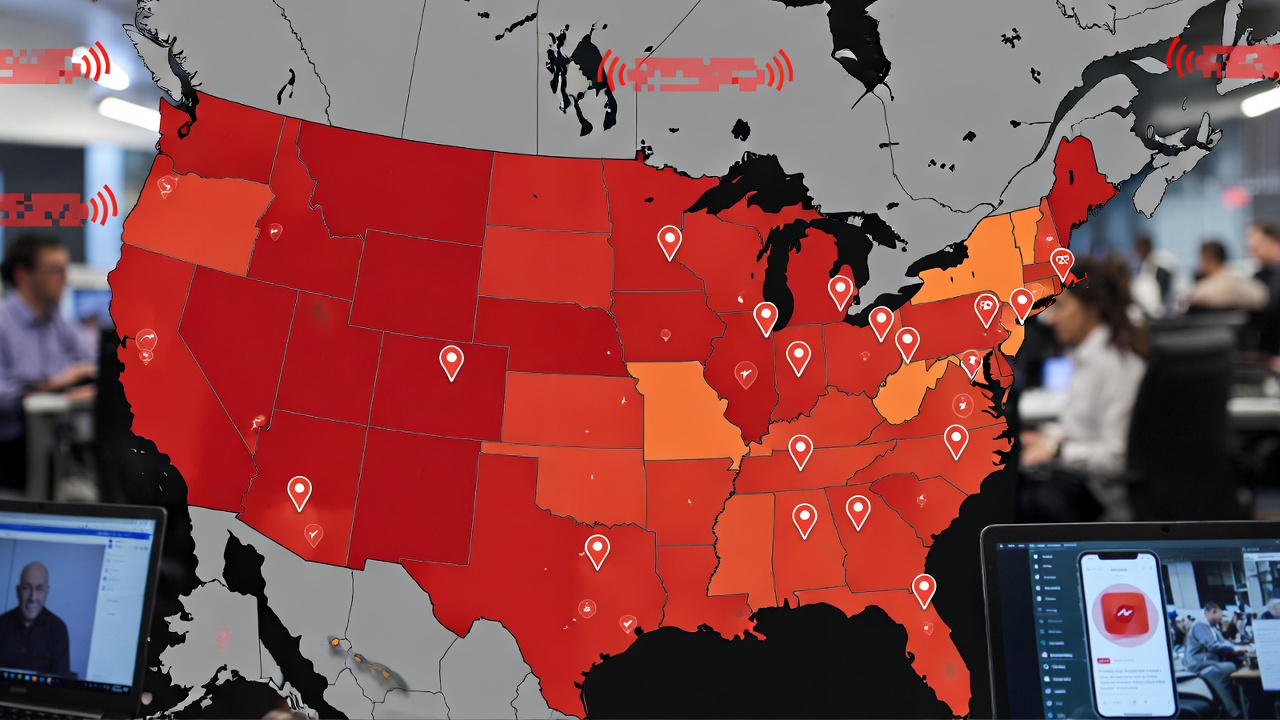
The outage began ramping up shortly after noon Eastern Time, with reports spiking around 12:00 PM to 12:30 PM ET. Customers across the nation, particularly on the East Coast—including areas like New York, New Jersey, Pennsylvania, Florida, North Carolina, Georgia—and extending to Texas, Kansas, California, and other regions, found their phones switching to “SOS” mode (on iPhones) or displaying no signal (on Android devices). This meant no regular voice calls, text messages over cellular networks, or mobile data access, effectively isolating users from communication and internet-dependent services.
Outage-tracking sites recorded peaks of over 170,000 to nearly 180,000 user reports, with the majority citing complete loss of signal or no service. While primarily affecting wireless services, some users also reported knock-on issues with home internet and Wi-Fi. Verizon officially acknowledged the problem around 1:00 PM ET, noting that it impacted wireless voice and data services for some customers. The company stated their engineers were engaged and working to identify and solve the issue quickly, but provided no specific cause—such as a cyberattack, infrastructure failure, or software glitch—or estimated time for resolution.
As of late afternoon (around 3:00 PM to 4:00 PM ET), the outage persisted for many, though some areas saw sporadic restorations—devices flickering between SOS mode and partial bars, likely due to network overload as services attempted to come back online. Emergency services remained accessible in SOS mode, allowing 911 calls to route through, but this did little to mitigate the broader disruption. The incident prompted emergency alerts in major cities like New York and Washington, D.C., highlighting its scale and potential public safety implications.
This wasn’t just a minor blip; it underscored how reliant modern society is on cellular infrastructure. Businesses dependent on mobile communication—think field teams, delivery services, or remote workers—faced immediate productivity losses, while individuals struggled with everything from coordinating daily tasks to accessing critical apps.
The Importance of Backup and Disaster Recovery for Businesses
Events like today’s Verizon outage serve as stark reminders of why robust backup and disaster recovery (BDR) strategies are non-negotiable for businesses. In a digital economy, downtime can cost thousands—if not millions—in lost revenue, damaged reputation, and regulatory penalties. According to industry estimates, the average cost of IT downtime is around $5,600 per minute for large enterprises, but even small businesses can suffer irreparable harm from prolonged disruptions.
BDR goes beyond simple data backups; it’s a comprehensive plan that includes redundant systems, automated failover, regular testing, and quick restoration protocols. For instance:
- Redundancy: Having multiple communication channels (e.g., VoIP over internet, satellite backups, or secondary carriers) ensures operations continue if one fails.
- Data Protection: Automated cloud backups prevent data loss from hardware failures, cyberattacks, or service outages.
- Recovery Time Objectives (RTO) and Recovery Point Objectives (RPO): These metrics define how quickly you can recover and how much data you can afford to lose, guiding investments in resilient infrastructure.
- Testing and Compliance: Regular drills simulate outages, while adherence to standards like HIPAA or GDPR ensures legal protection.
Without BDR, businesses risk cascading failures: an outage in one area (like cellular service) can halt sales, delay shipments, or expose vulnerabilities to threats. Today’s incident, affecting millions of Verizon customers nationwide, illustrates how a single provider’s issue can ripple through supply chains and customer interactions.
How Microsoft 365 Can Benefit in Outage Scenarios
In scenarios like the Verizon outage, cloud-based platforms like Microsoft 365 shine by providing resilient, internet-agnostic tools that keep teams connected and productive. Microsoft 365 is a suite of productivity apps including Teams, OneDrive, SharePoint, Exchange Online, and more, all hosted in Microsoft’s global data centers with built-in redundancy.
Here’s how it helps during disruptions:
- Communication Continuity: Microsoft Teams allows voice and video calls over Wi-Fi or alternative internet connections, bypassing cellular dependency. If mobile data is down, users can switch to home broadband or public Wi-Fi to join meetings, chat, or collaborate in real-time.
- Cloud Storage and Access: Files in OneDrive or SharePoint are accessible from any device with internet, ensuring data isn’t tied to a single network. Automatic syncing means work done offline uploads once connectivity returns.
- Email and Productivity: Exchange Online keeps email flowing, and apps like Word, Excel, and PowerPoint support offline editing with seamless cloud integration.
- Built-in Security and Reliability: Microsoft’s infrastructure boasts high uptime SLAs, geo-redundant data centers, and advanced threat protection, reducing risks from external outages.
For businesses impacted today, those already on Microsoft 365 could pivot to Wi-Fi-based workflows, minimizing downtime. At US 365 Cloud Consulting, we’ve helped clients leverage these features to maintain operations during similar events, turning potential crises into manageable hiccups.
Why BDR is Needed to Support All Systems—Even with Microsoft 365
That said, Microsoft 365 isn’t a silver bullet. While it’s excellent for productivity and collaboration, it relies on internet access, which could be affected if the outage extends to broadband. Comprehensive BDR fills these gaps by integrating hybrid solutions: on-premises backups, multi-cloud redundancy, and automated failover to alternative providers.
For example, if Microsoft 365 experiences its own rare downtime or if your primary internet fails, BDR ensures quick restoration from local copies or secondary clouds. It also covers non-Microsoft systems, like legacy software or custom databases, that might not integrate seamlessly. In essence, Microsoft 365 enhances resilience, but BDR provides the full safety net—protecting against hardware failures, ransomware, natural disasters, and provider-specific outages like Verizon’s.
Final Thoughts: Partner with US 365 Cloud Consulting for Unbreakable Continuity
The Verizon outage of January 14, 2026, is a timely lesson in vulnerability and preparedness. By investing in BDR alongside tools like Microsoft 365, businesses can emerge stronger from disruptions. At US 365 Cloud Consulting, we’re here to assess your needs, implement tailored solutions, and ensure your operations stay online no matter what. Contact us today to discuss how we can fortify your cloud strategy—because in business, downtime isn’t an option.
References
- TechRadar: Live coverage of Verizon outage January 2026
- NBC News: Widespread Verizon outage prompts emergency alerts
- The New York Times: Verizon Outage Affects Tens of Thousands of Users, Tracking Site Shows
- Reuters: Verizon’s network down for tens of thousands of users in US
- CNN: Verizon network outage: Some wireless customers can’t place calls or access data
- Downdetector: Verizon outage reports and map (user-submitted data as of January 14, 2026)
- Various additional reports from USA Today, Tom’s Guide, Mashable, and Associated Press on outage timeline, impacts, and Verizon statements
Leave a Reply